
FRP Cable Trays
FRP Cable Trays
FRP cable trays feature interconnected channels designed to hold and support electrical cables and wires. Manufacturers use fiberglass reinforced polymer materials, which make the trays lightweight, durable, and resistant to corrosion, chemicals, and extreme temperatures. Certified GFRP companies in UAE ensure high quality, safety, and long-lasting performance across various applications.
Features
Corrosion Resistance: FRP cable trays resist corrosion, which makes them ideal for harsh environments. They perform well in chemical plants and wastewater treatment facilities. In addition, their durability suits coastal areas where metal trays would quickly degrade.
Lightweight: Compared to metal trays, FRP cable trays weigh less, so workers can handle, transport, and install them more easily. As a result, projects save on labor and equipment costs.
Strength and Durability: Despite being lightweight, FRP cable trays deliver excellent strength and durability. They reliably support cables and wires over long spans without sagging or bending. Moreover, their design ensures long-term performance in demanding conditions.
Non-Conductive: Fiberglass reinforced polymer materials do not conduct electricity. Therefore, FRP cable trays are ideal for electrical installations that require insulation to prevent electric shock.
Chemical Resistance: FRP cable trays resist a wide range of chemicals, including acids, alkalis, solvents, and oils. Therefore, they are well-suited for industrial environments where chemical exposure is common.
UV Resistance: FRP cable trays withstand prolonged exposure to sunlight without losing strength or structural integrity. As a result, they are ideal for outdoor installations.
Fire Retardant: FRP cable trays meet fire safety standards and regulations, offering added protection in case of a fire.
Customization: FRP cable trays come in various sizes, shapes, and configurations to fit different cable layouts. Additionally, they can be customized with accessories such as covers, dividers, and fittings.
applications
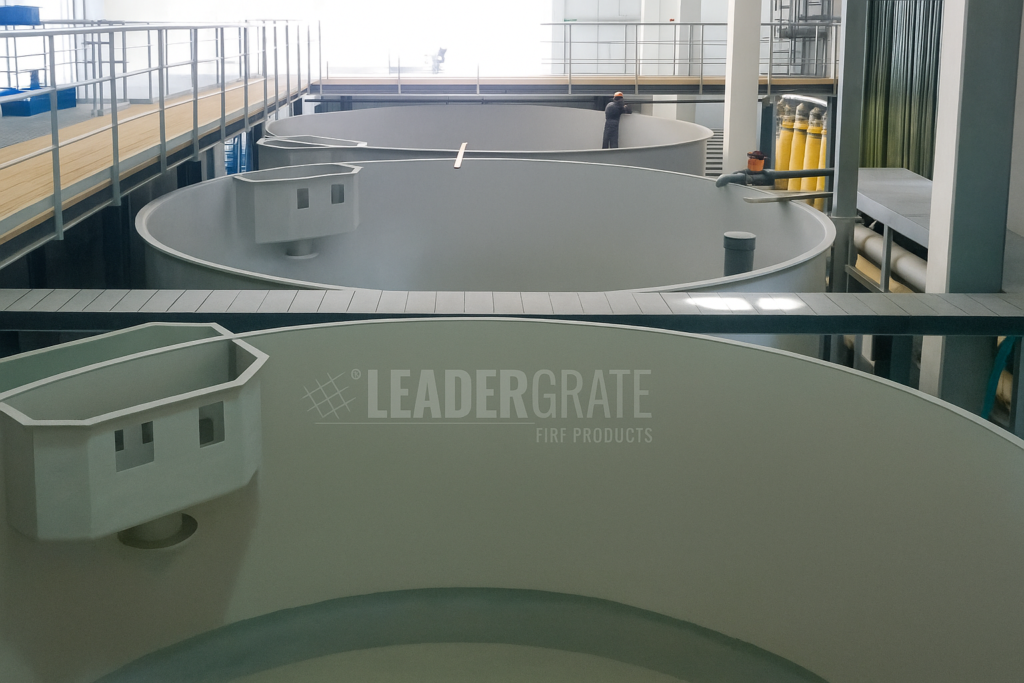
- Chemical Industry: Chemical processing plants commonly use FRP rotifer tanks to store acids, bases, solvents, and other corrosive chemicals.
- Water Treatment: Water treatment facilities use FRP rotifer tanks to store chemicals for purification processes, such as chlorine and sodium hydroxide.
- Petrochemical Industry: Petrochemical plants use FRP tanks to store gasoline, diesel, and other petroleum products.
- Food and Beverage Industry: FRP tanks are ideal for storing food-grade liquids such as fruit juices, syrups, and edible oils.
- Wastewater Treatment: Sewage treatment plants use FRP tanks to store and process wastewater along with chemicals involved in treatment processes.
- Aquaculture: They are utilized in aquaculture facilities for storing water and chemicals used in fish farming operations.
- Mining Industry: FRP tanks can store corrosive chemicals used in mining processes, such as leaching solutions for metal extraction.