FRP Fuel Tank
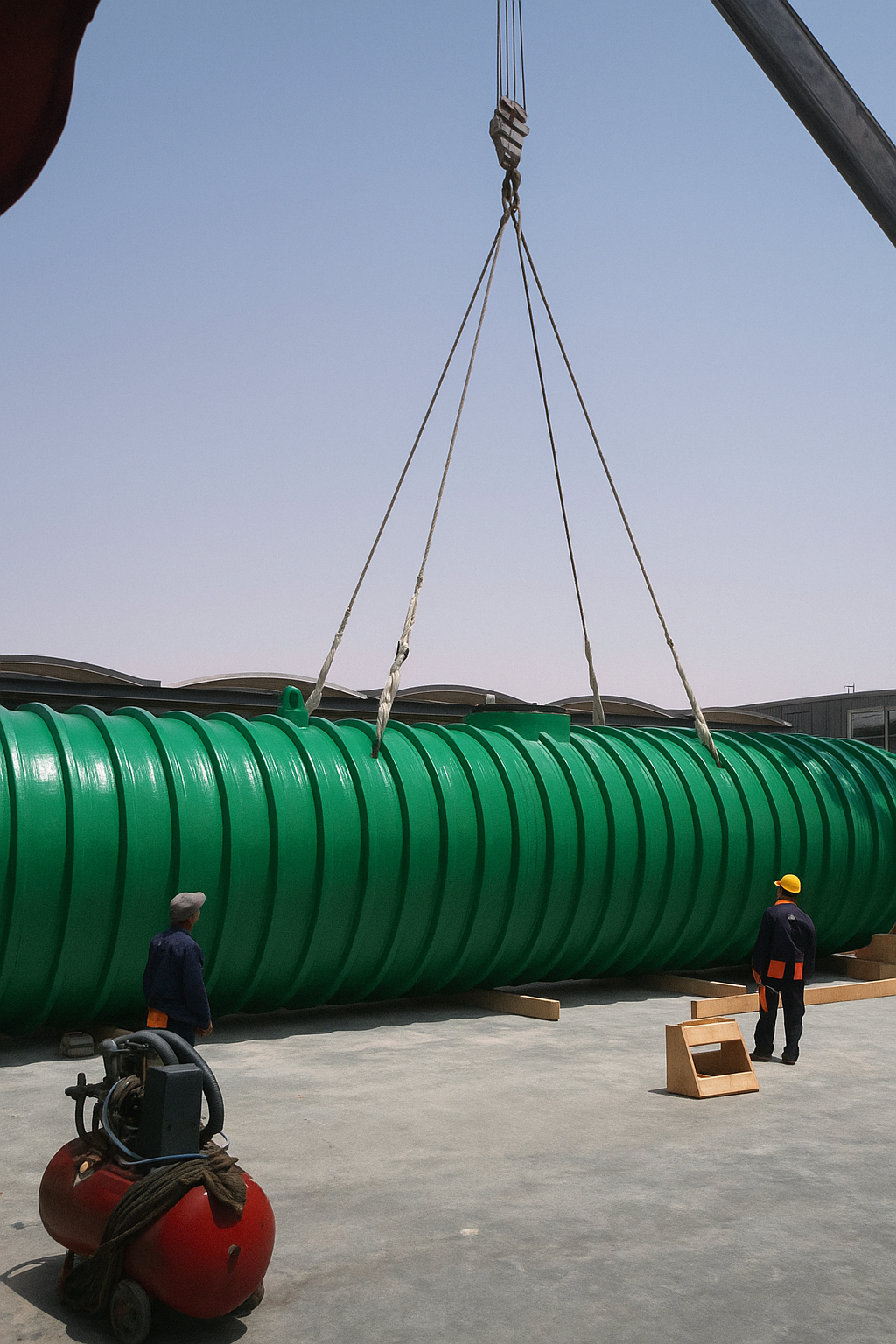
FRP Fuel Tank
FRP (Fiber Reinforced Plastic) fuel tanks provide robust and durable storage for fuels such as gasoline, diesel, and aviation fuel. They use advanced composite materials made of a polymer resin matrix reinforced with fiberglass or other fibers. This construction offers clear advantages over traditional metal tanks, including corrosion resistance, lighter weight, and flexible configurations. As the Best FRP Fuel Tank Manufacturing Company in UAE, we deliver high quality solutions that meet industry standards and ensure long-lasting performance.
Features
Corrosion Resistance: FRP fuel tanks resist corrosion from fuel, moisture, and environmental elements. This strength ensures durability and reliability even in harsh operating conditions.
High Strength-to-Weight Ratio: FRP fuel tanks are lightweight yet maintain excellent structural integrity. They can handle the internal pressure of stored fuel and endure external loads during transportation or installation.
Customizable Design: You can customize FRP fuel tanks for size, shape, and configuration to match specific storage needs and space limits. This flexibility allows easy integration into different vehicles or stationary applications.
Seamless Construction: Manufacturers typically mold FRP fuel tanks as a single seamless piece. This method removes welds or seams, which can become weak points or sources of leakage.
Chemical Compatibility: FRP materials handle a wide range of fuels, including gasoline, diesel, biodiesel, ethanol, and aviation fuel. This property prevents fuel contamination and reduces the risk of degradation over time.
Leak Detection and Monitoring: You can install built-in leak detection systems or monitoring devices in FRP fuel tanks. These systems detect leaks or fuel level changes, giving early warnings and reducing the risk of contamination or fuel loss.
Fire Resistance: Manufacturers can design FRP materials to meet fire safety standards and improve fire resistance. This reduces the risk of fuel ignition and combustion during accidents.
Insulation Properties: FRP fuel tanks provide thermal insulation, which helps maintain consistent fuel temperatures. This also prevents condensation inside the tank, reducing the risk of contamination or corrosion.
applications
Automotive Industry: Automakers use FRP fuel tanks in automobiles, trucks, buses, and other vehicles to store gasoline or diesel. These tanks provide safe, reliable storage while reducing weight and improving fuel efficiency.
Marine Industry: Marine vessels, including boats and yachts, use FRP fuel tanks to store fuel for engines, generators, and auxiliary equipment. These tanks provide corrosion resistance and long-lasting durability in marine environments.
Aerospace Industry: Additionally, aircraft and aerospace applications use FRP fuel tanks to store aviation fuel or hydraulic fluids. This design provides lightweight, reliable storage for propulsion systems and auxiliary power units (APUs).
Stationary Storage: Moreover, stationary applications, such as backup generators, fueling stations, and remote storage facilities, benefit from FRP fuel tanks. These tanks provide a reliable and cost-effective solution for on-site fuel storage.
Off-Road Vehicles: Additionally, off-road vehicles, construction equipment, agricultural machinery, and military vehicles use FRP fuel tanks to store fuel. This setup provides rugged and dependable storage for demanding off-road environments.